Software is being given authority. Trust must be provable, not assumed.
I'm a founding member and Chief Product Officer at Caution.
Caution
At Caution, we're building open-source infrastructure for verifiable applications: software whose users can check what code is running and who they're trusting.
We help teams deploy sensitive workloads into secure enclaves and cryptographically link what runs in production to specific, auditable code. Users, customers, and counterparties get evidence they can check for themselves, not assurances they have to accept.
As Chief Product Officer, I lead product: turning deep security engineering into something teams can actually deploy.
The question that has followed me across every role (what must someone trust, and what can they independently verify?) is the foundation of the product.
caution.coExpertise
- Verifiable authority
- AI agent security
- Applied cryptography
- Confidential computing
- Key management
- Security architecture
Technologies
- AWS Nitro · Intel TDX · AMD SEV
- MPC · HSMs · PKI · Attestations
- Rust · Python · Go
- Reproducible Builds
I work on systems that hold or delegate authority — keys, credentials, agents, policies, and privileged actions — and on making that authority constrained, auditable, and provable.
The recurring question is simple: under what conditions should a system be allowed to release authority?
A private key. A signing capability. An access token. A privileged API call. A delegated permission into a system too complex to simply trust.
My focus is on the primitives that make this provable: confidential computing, remote attestation, ZK proofs, and policy-bound credentials that constrain what a system can do before it acts — and let it demonstrate that constraint to the parties relying on it.
Once systems can act, security is not only about preventing compromise. It is about deciding what they are allowed to do, under which conditions, and what they can prove before authority is granted.
Independent work
- Agent credentials
- Policy enforcement
- Verifiable execution
Outside Caution, I'm developing practical frameworks for agent credential control, policy enforcement, and verifiable execution — the missing security layer between increasingly capable AI systems and the real-world authority they are being given.
An early path toward a TEE-backed credential gateway for AI agents. It gives tools revocable phantom tokens instead of real API keys, centralizes route scoping and rotation, and moves credential injection toward an attestable TDX trust boundary.
A practical diagnostic for engineering teams building on confidential computing. Designed to answer the question theoretical attestation guarantees leave open: how much of this system can actually be independently verified in production?
What I've built
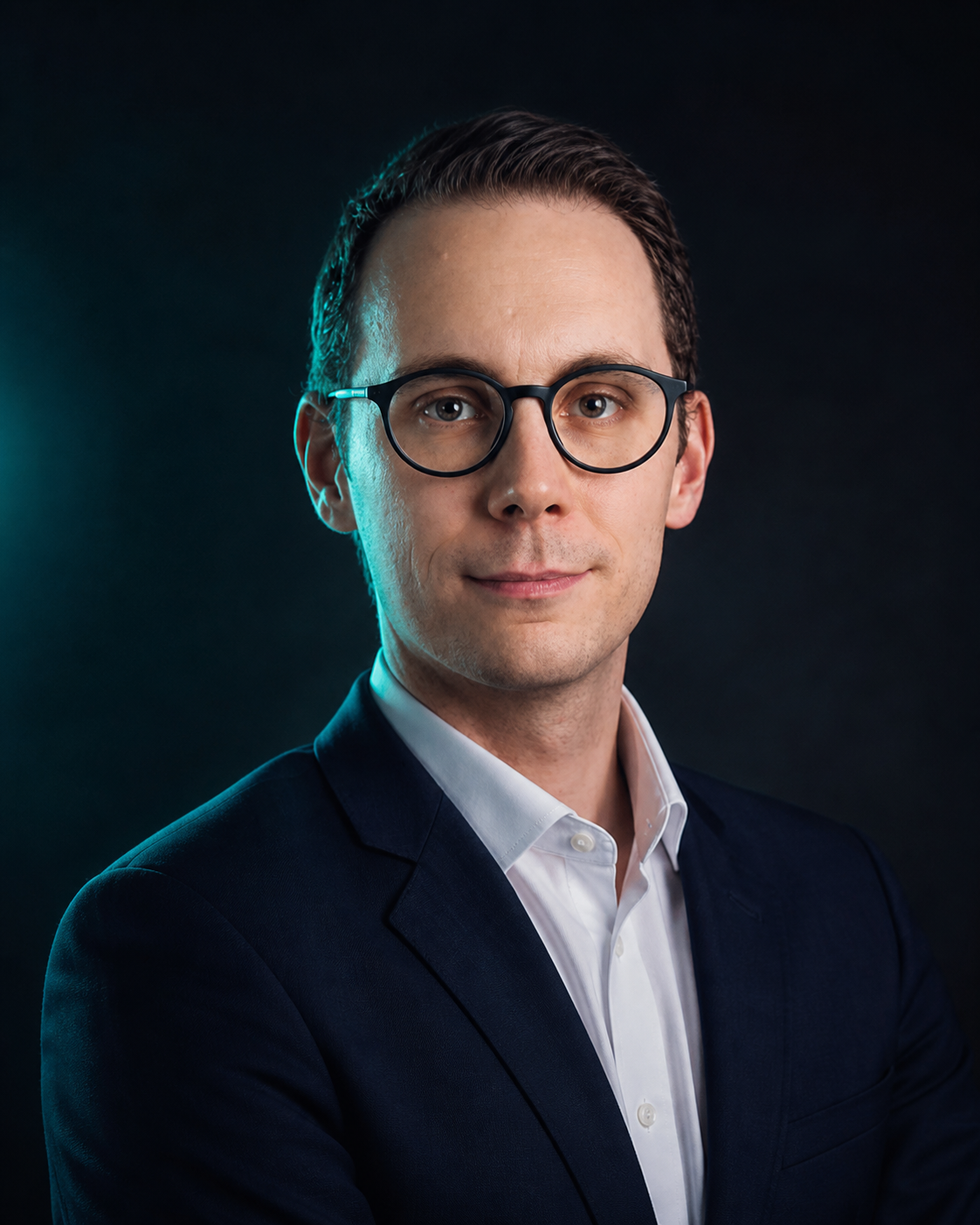
Vincent Kobel
Over more than a decade, I have worked on and shipped production systems with high security requirements across cybersecurity, digital assets, applied cryptography, confidential computing, key management, and infrastructure.
I have built security functions from scratch, designed custody and wallet security architectures, supported institutional blockchain and staking infrastructure, and worked with product and engineering teams to turn complex trust assumptions into concrete systems.
Founding team member. Leading product for open-source verifiable compute infrastructure: deploying sensitive workloads into secure enclaves and cryptographically linking what runs in production to specific, auditable code. Work spans product direction, security architecture, and making confidential computing and attestation practical for teams to deploy.
Built and owned Kiln's security function from scratch, scaling it to a 7-person team across product security, cloud security, infrastructure security, detection and response, GRC, and security operations. Ran threat modeling, architecture reviews, and trust model design for staking, wallets, and key management systems. Led incident response, audit readiness, and a major security incident from detection through resolution.
Built Blockdaemon's cybersecurity program, then owned wallet product security and digital asset security for MPC, confidential computing, and custody products. Led architecture decisions, roadmaps, and commercial technical discussions, working directly with AWS Nitro Enclaves in production. Initiated and drove the strategic acquisition of Sepior, adding MPC IP and a specialist team to Blockdaemon's custody stack.
Founding team member. Owned security architecture for Harmonize, Metaco's institutional cryptocurrency custody platform, from initial threat model through global launch — protecting billions in digital assets for institutional clients. Designed and implemented across HSMs, PKI, MPC, confidential computing, and containerization. Built specialized tooling in Python and Rust. Helped scale the team to over 30 engineers. Metaco was acquired by Ripple in 2023.
Delivered penetration tests, security assessments, applied cryptography, threat modeling, and secure architecture reviews for finance, telecom, critical infrastructure, and high-security event environments, including cybersecurity work supporting the World Economic Forum.
On consciousness and AI
I care about the distinction between intelligence and consciousness: between systems that process, optimize, and simulate understanding, and beings for whom there is something it is like to be. Capability is not understanding. Performance is not presence. As AI systems gain authority over decisions, tools, credentials, and people, this distinction matters because it shapes what we should expect from them, what we should refuse to project onto them, and where human judgment must remain non-delegable.
I write about this at The Living Ground.